
TWO AUDIENCES · TWO WORKFLOWS
Different brewing days. Clearer information.
GRISTORA is designed first around the decisions, measurements and records of professional brewery teams. Homebrewers have a separate workflow.
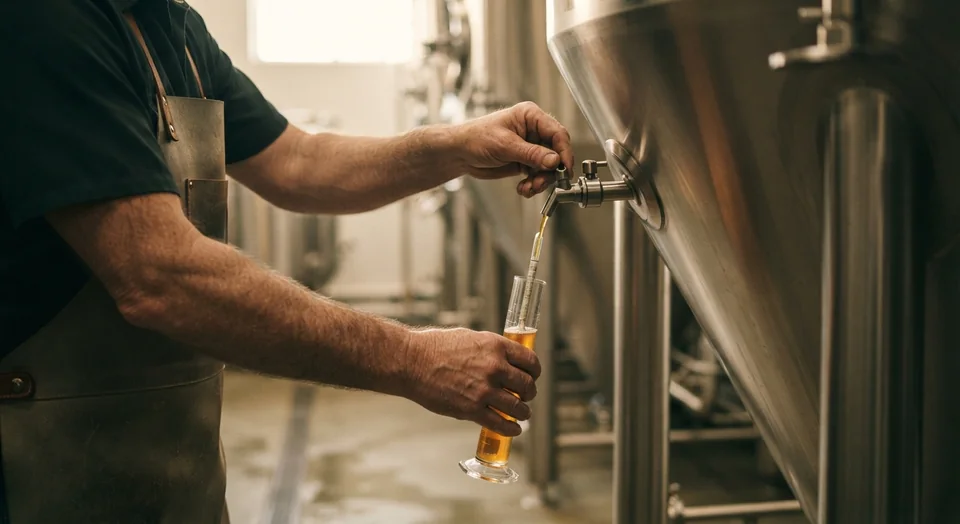
01 · PROFESSIONAL BREWERIES
From recipe review to production records.
For teams that need shared context around recipes, batches, vessels and quality records.
- 01
Recipe review
Establish the recipe definition, target values and version context for the batch.
Recipe management - 02
Production planning
Plan production tasks and equipment use within the Business workflow.
Planning & scheduling - 03
Batch records
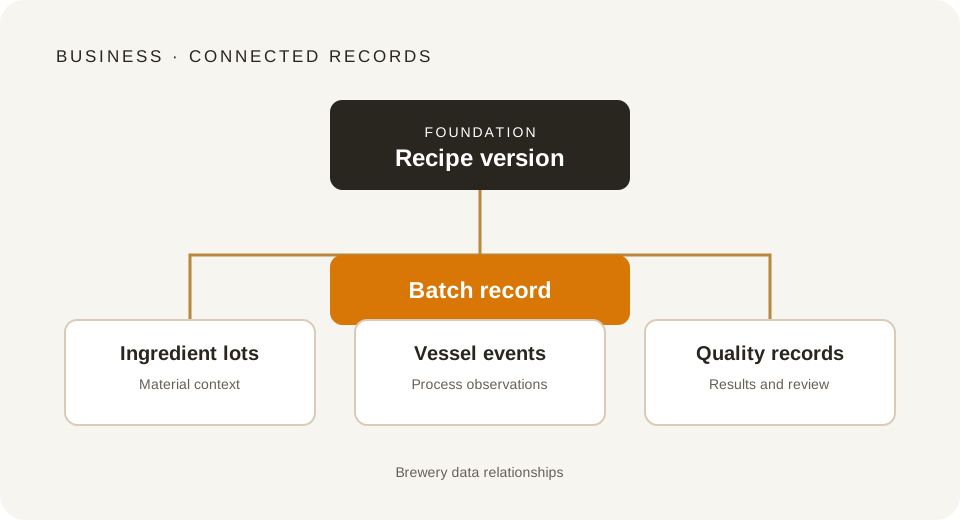
Connect the recipe reference with planned and actual measurements, quantities and operator notes.
Production records - 04
Vessel observations
Keep fermentation and vessel observations in context with the batch.
Fermentation & tracking - 05
Quality and traceability
Relate quality results and material lots to the production record.
Quality & laboratory
GRISTORA is not a general ERP. Sales, customer orders, distribution/shipping, keg tracking at customer sites and keg deposits, CRM and accounting are outside the product scope.
02 · HOMEBREWERS
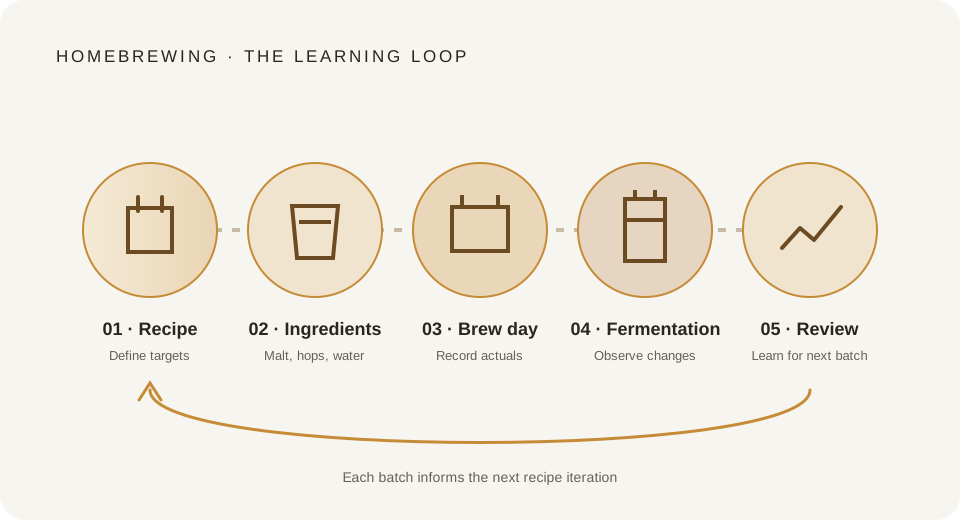
From recipe idea to batch learning.
For the brewer who designs, makes, measures and reviews their own batches.
- 01
- 02
Ingredients and water
Bring fermentables, hops, yeast, water and mash assumptions into one recipe context.
Water, mash & yeast - 03
Calculations
Understand estimates through explicit methods, inputs, units and assumptions.
Brewing calculations - 04
Brew day
Keep planned targets distinct from actual quantities, times, temperatures and measurements.
Brew-day records - 05
Fermentation
Bring batch observations and manual or connected readings into the batch history.
Fermentation - 06
Batch review
Review actual results and tasting notes to inform the next recipe iteration.
Batch insights
BUSINESS AND HOME · SIDE BY SIDE
One product. Two distinct workflows.
This comparison explains the different information needs and records.
On narrow screens, swipe or scroll horizontally to compare both columns.
| Dimension | Professional Breweries | Homebrewers |
|---|---|---|
| Primary user | Brewing teams that need shared production context across recipes, batches, vessels and quality records. | An individual brewer making, measuring and reviewing personal batches. |
| Core unit of work | A recipe version and the production batch that references it. | A recipe and the personal batch made from it. |
| Typical records | Recipe version, batch plan and actuals, ingredient lots, vessel events, quality and laboratory records. | Recipe and targets, ingredients and water, brew-day actuals, fermentation observations, tasting and review. |
| Measurement context | Production measurements, vessel observations and laboratory results, with method, unit, source and operator context. | Manual readings and any validated supported-device inputs, with source, unit and timestamp. |
| Main question | What happened across this batch, where did actuals differ, and which records explain the outcome? | What happened in this brew, and what might I change next time? |
| Scope boundary | Brewing-specific production records—not sales, orders, shipping, CRM, accounting or a general ERP. | Personal brewing and learning—not professional multi-batch production operations. |